Every sip counts
flyPAD
Automated Feeding Behavior Monitor
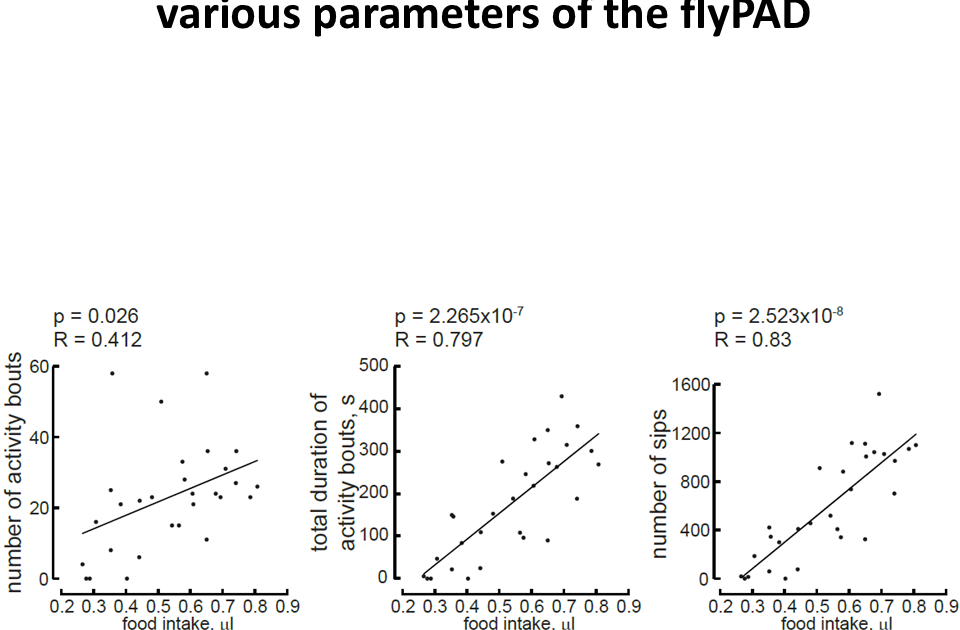
The flyPAD (fly Proboscis and Activity Detector) uses capacitance-based sensing to automatically detect and quantify feeding behavior in Drosophila melanogaster with single-sip resolution. Monitor up to 96 individual flies per system, and run several systems in parallel to measure several hundreds of flies simultaneously.
Key Features
High-Throughput Screening
Monitor hundreds of flies simultaneously by running several 96-channel systems in parallel. Run large-scale genetic or pharmacological screens with ease.
Single-Sip Resolution
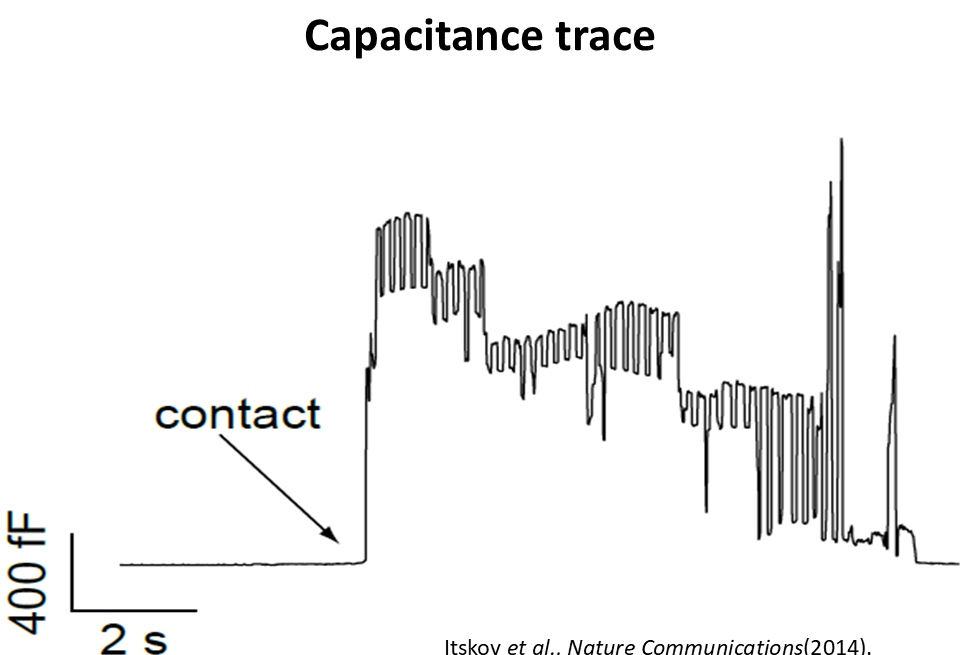
Detect individual proboscis-food interactions at 100 Hz. Quantify sip number, duration, and inter-sip intervals with millisecond precision.
Food Preference Assays
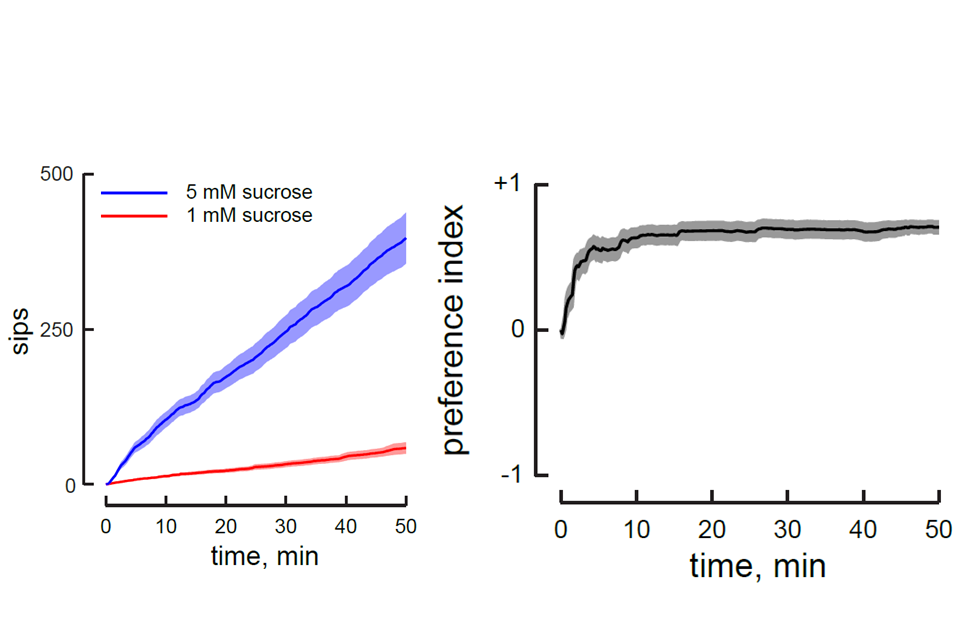
Two-choice feeding arenas let you measure food preference simultaneously with intake. No dye needed — purely electronic detection.
Feeding Microstructure
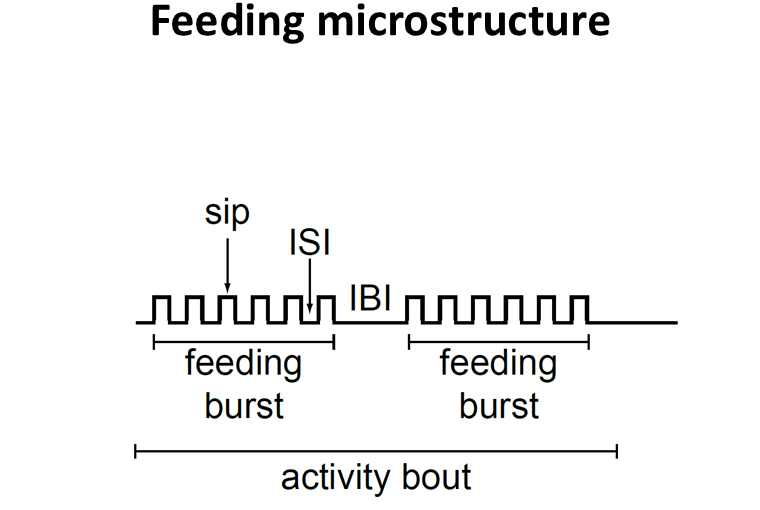
Analyze feeding motor programs: burst duration, inter-burst intervals, activity bouts. Reveal pharmacological or genetic effects invisible to bulk assays.
Automated & Reproducible
Eliminate observer bias. Automated detection ensures consistent, reproducible results across experiments and labs.
Publication-Ready Output
Generate figures and statistics directly from acquisition data. Validated in 70+ published studies.
See sample output ↓Technical Specifications
| Detection Method | State-of-the-art capacitance-based proximity sensor. fF resolution. |
| Channels | 96 channels per system (48 flies with 2-choice configuration or 96 flies with a single food choice option) |
| Scalability | Using several systems in parallel allows to monitor up to several hundreds of individual animals simultaneously |
| Sampling Rate | 100 Hz (100 samples/second) |
| Resolution | Single sip detection |
| Software | Open-source and customizable interface based on Bonsai for data acquisition. Easy-to-use and intuitive MATLAB and Python software for data analysis. Possibilities for software customization. |
| Output | Publication-ready data and figures and full control over data analysis |
| Food Types | Solid and liquid |
Note on Food Types
We recommend using solid (1–2% agarose-based) food for our assays, especially in Diptera. This allows the system to capture feeding at the highest possible resolution due to the different mode of intake on solid foods. Liquid food can also be used, but it will produce a different behavior — pumping instead of sipping — and is more difficult to quantify. However, we are successfully using liquids for mosquitoes and other insects.
Sample Data Analysis
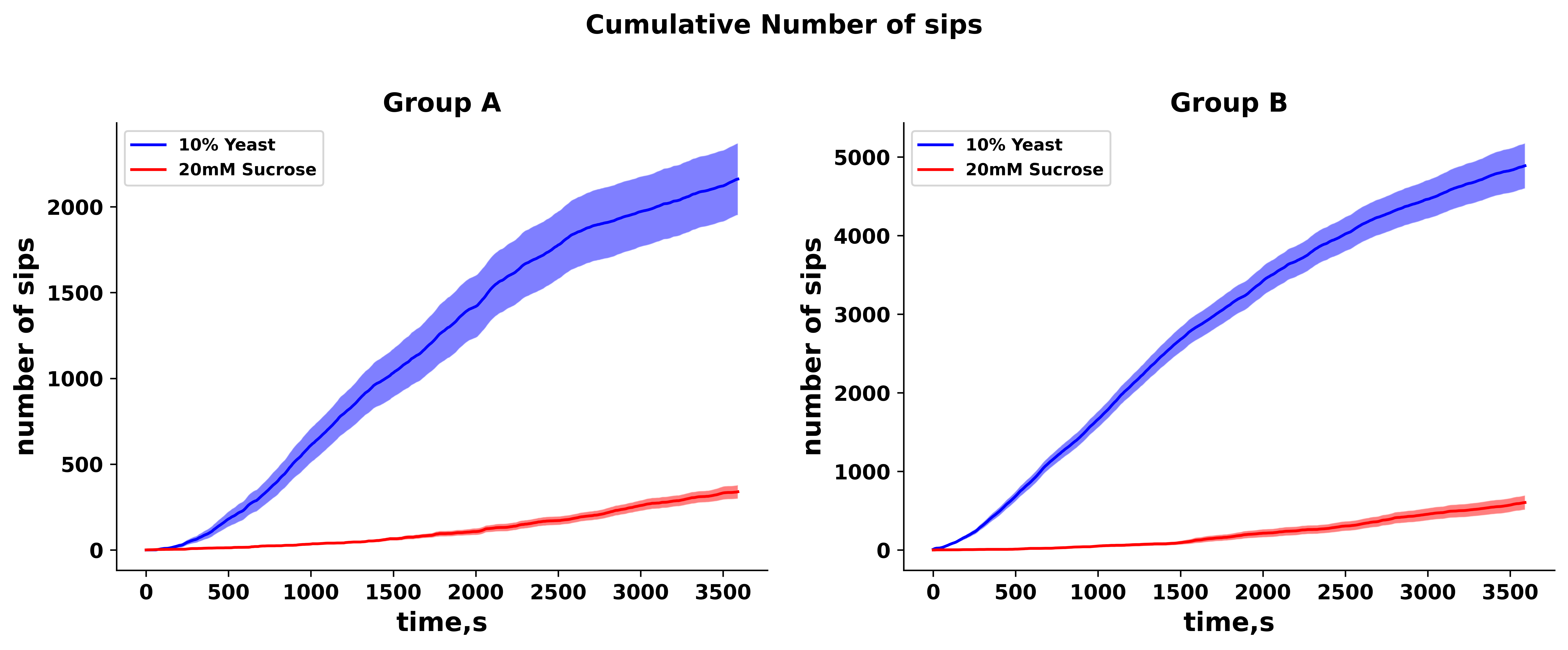
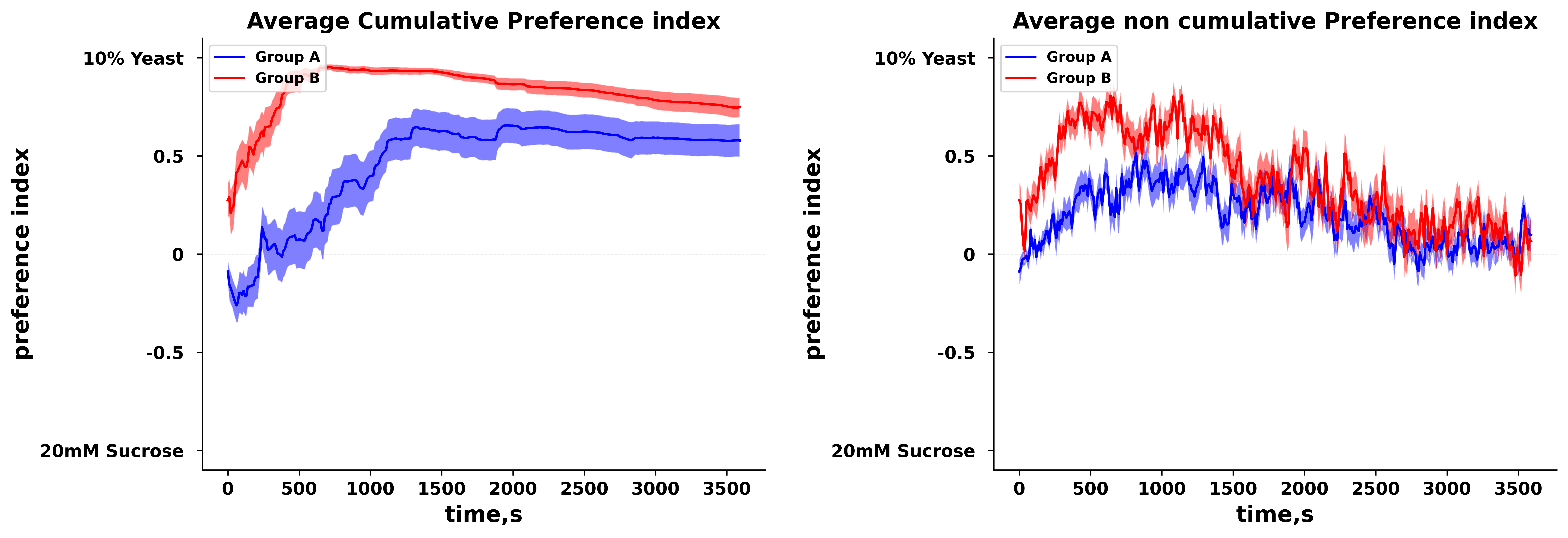
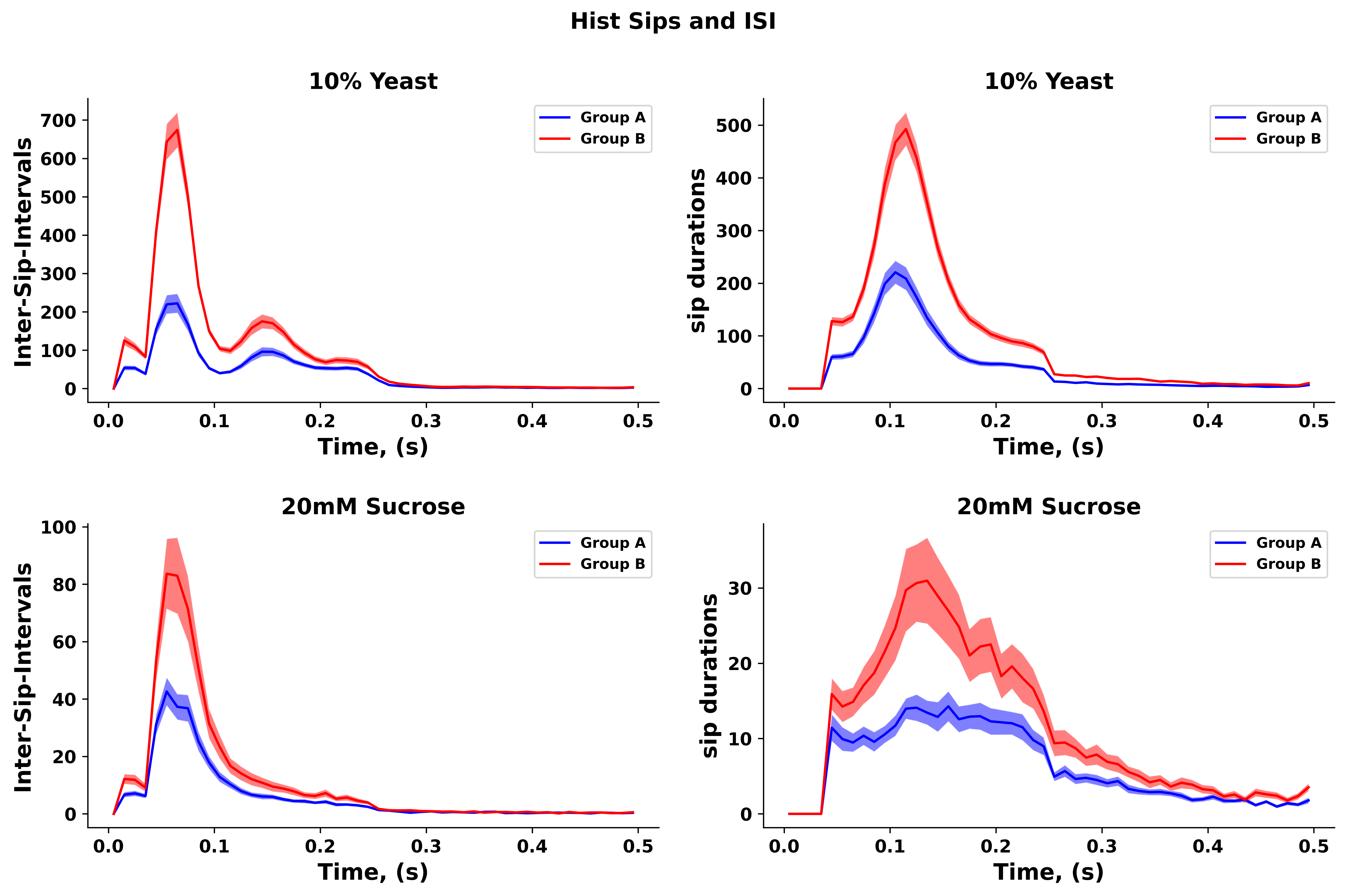
You put in flies and food — the software does the rest. Below is real output generated automatically from a sample dataset: publication-grade figures and more than 20 quantitative metrics of feeding behavior, complete with statistical analysis.
Every figure below was generated automatically by the software from a single experiment — 32 flies, two food substrates, 1-hour recording. No manual plotting.
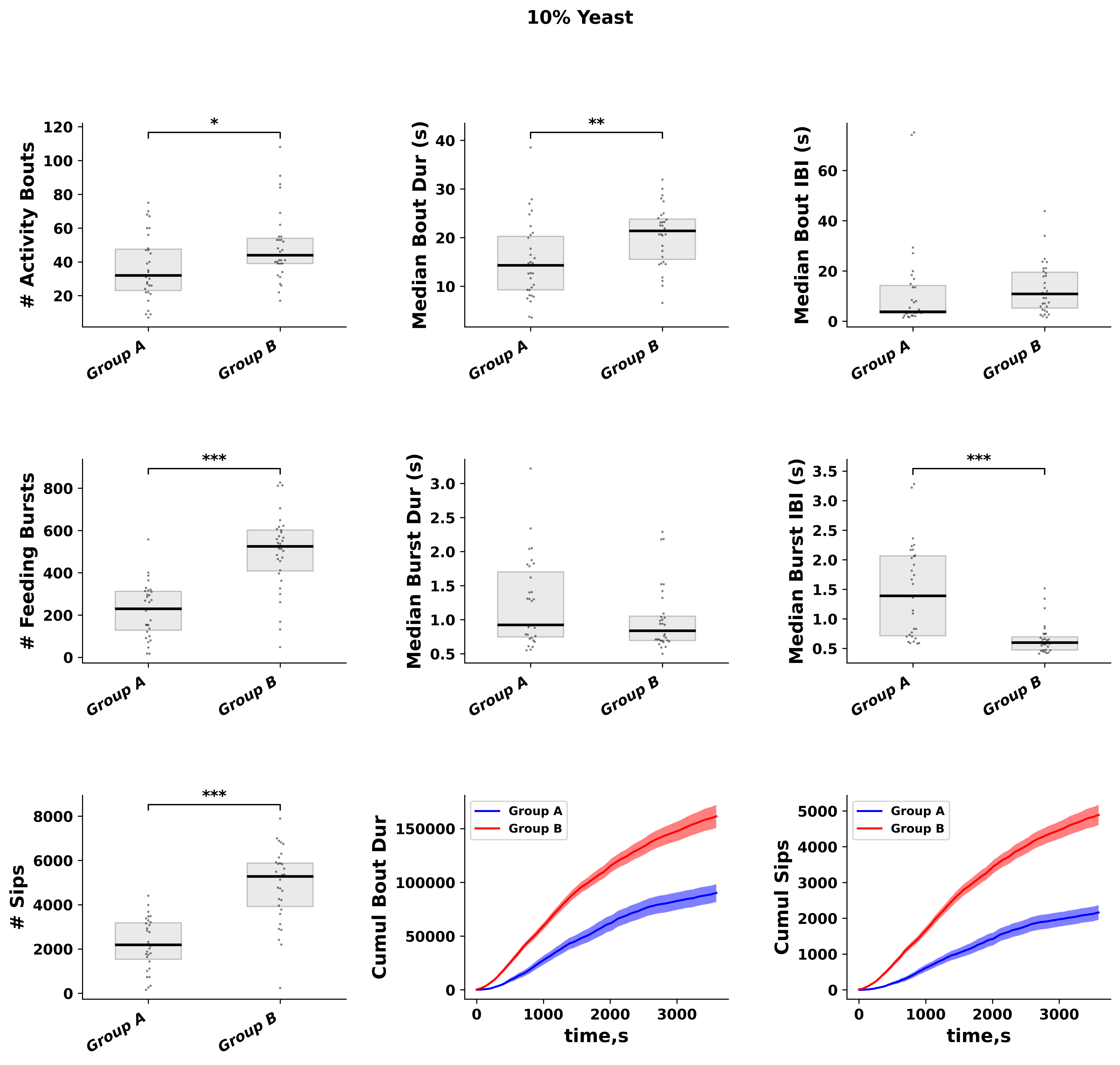
Activity bouts, feeding bursts, sip counts — with statistical comparisons and cumulative timecourses.
How It Works
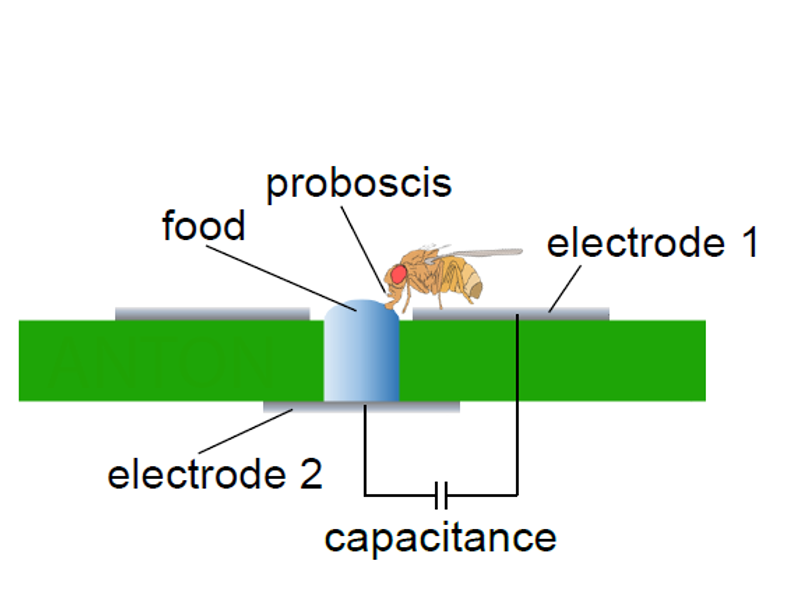
The flyPAD detects feeding using a high-sensitivity capacitance-to-digital converter that measures tiny changes in capacitance between two electrodes — one beneath the fly and one embedded in the food. When a fly extends its proboscis to interact with food, the proximity of the proboscis alters the electric field between the electrodes, producing a measurable capacitance shift at femtofarad (fF) resolution.
This principle is similar to how your smartphone's touchscreen works, but the flyPAD uses a dedicated capacitance-to-digital converter optimized for ultra-low-power, high-sensitivity proximity detection — capable of resolving the tiny proboscis of a single Drosophila at 100 samples per second.
Data acquisition runs through the open-source Bonsai framework, enabling real-time visualization and flexible experimental protocols.
Fly feeding on the flyPAD
flyPAD vs Traditional Methods
| Feature | flyPAD | CAFE Assay | Dye-Based |
|---|---|---|---|
| Temporal Resolution | 10ms (single sip) | Hours (endpoint) | Hours (endpoint) |
| Automation | Fully automated | Manual reads | Manual processing |
| Feeding Microstructure | Yes | No | No |
| Observer Bias | None | Moderate | High |
Automation
You put in flies and food — the system does the rest: publication-grade figures and more than 20 quantitative metrics of feeding behavior, complete with statistical analysis.
See the sample data analysis exampleKey Publications
Automated monitoring and quantitative analysis of feeding behaviour in Drosophila
Nature Communications (2014) | 266 citations
View publication →Automated analysis of feeding behaviors of females of the mosquito Aedes aegypti using a modified flyPAD system
Scientific Reports (2023)
View publication →Related Applications
Interested in flyPAD?
Get a quote tailored to your lab's needs. We respond within 1 business day.
Request a Quote